
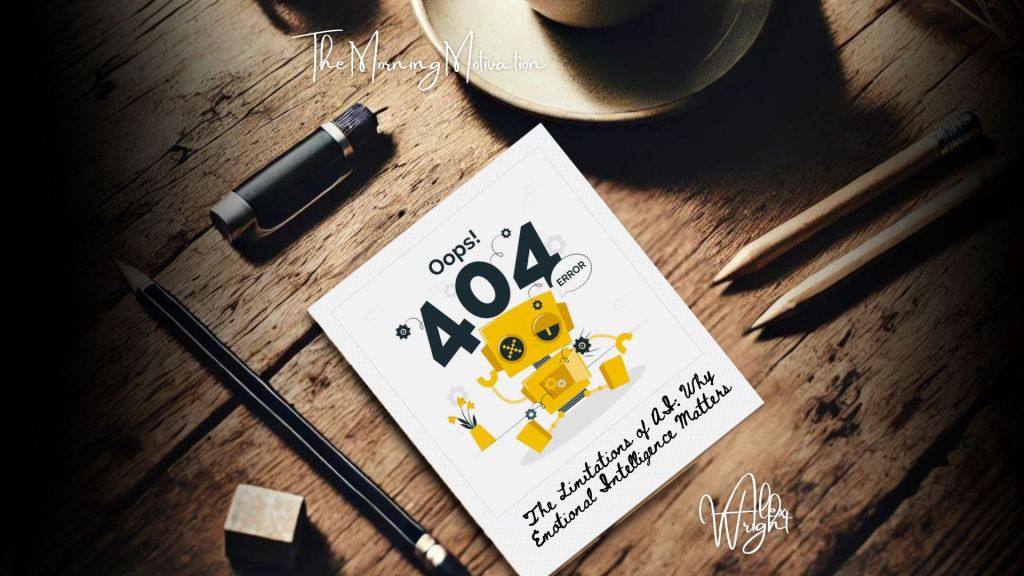
By Alexandra Wright
In an era dominated by technological advancement, it is becoming increasingly evident that artificial intelligence (AI) struggles to grasp the intricate nuances of emotional intelligence (EI). This blog delves into the unprogrammable essence of human emotions, exploring the critical attributes that AI cannot replicate or comprehend. As we navigate a landscape where interpersonal connections are paramount, understanding these limitations is essential for leveraging AI effectively—without diminishing our innate human capabilities.
The Complexity of Emotional Intelligence
Emotional intelligence encompasses a wide range of capabilities: identifying, understanding, managing, and using emotions in ways that improve communication and relationships. These deeply human traits are not governed by logic or predictability, making them inaccessible to even the most advanced AI systems.
Key Components of Emotional Intelligence
- Self-awareness – Recognising and understanding your own emotions.
- Self-regulation – Managing emotional responses to adapt effectively.
- Empathy – Understanding others’ emotions and perspectives.
- Social skills – Navigating complex interpersonal dynamics.
- Motivation – Emotionally driven persistence toward goals.
AI’s Shortcomings in Understanding Emotions
1. Lack of True Understanding
AI can analyse data, recognise patterns, and even mimic facial expressions, but it lacks consciousness. It cannot grasp emotional subtext such as irony, cultural cues, or vulnerability.
2. Inability to Connect Authentically
Human connection stems from lived experience, shared meaning, and empathy—elements AI does not possess. As such, attempts to simulate empathy are often superficial and mechanical.
3. Reductionist Approach to Emotion
AI reduces complex emotional states into binary or numerical outputs. This risks oversimplifying human emotion, leading to inappropriate responses in sensitive interactions.
Navigating the AI Landscape Responsibly
Complement, Don’t Replace
AI should be used to enhance, not replace, human decision-making—particularly where emotions influence outcomes.
Prioritise Human Interaction
Create opportunities for face-to-face or empathetic dialogue alongside automated systems to preserve the human touch.
Invest in Emotional Intelligence Training
Upskill teams with EI training to strengthen leadership, collaboration, and conflict resolution.
Leverage Data with Discretion
Use AI-generated insights as a guide, but let human judgment interpret emotional nuance and context.
Conclusion: Embracing the Human Touch
As we move deeper into an AI-enhanced world, our emotional intelligence becomes one of our most vital assets. While machines may outperform us in speed and efficiency, they cannot replicate empathy, compassion, or emotional depth. True leadership in the digital age will come from those who understand how to balance automation with human connection.
Let us not surrender what makes us irreplaceably human—our ability to feel, understand, and connect. our ability to feel, understand, and connect. balance lies our path forward.
#EmotionalIntelligence #AIandHumanConnection #LeadershipSkills #FutureOfWork #EmpathyMatters #EmotionalIntelligenceInLeadership #LimitationsOfAI #HumanVsAI #ResponsibleTechnology #DigitalLeadership #AlexWright #AlexandraWright
Read More Related Blogs:
developing strong communication skills
lessons for building a successful sales career
gaining real-world value through sales skills
 Alexandra Wright
Leave a comment